-->

Friday, 23 March 2012

Early Morning Sightings

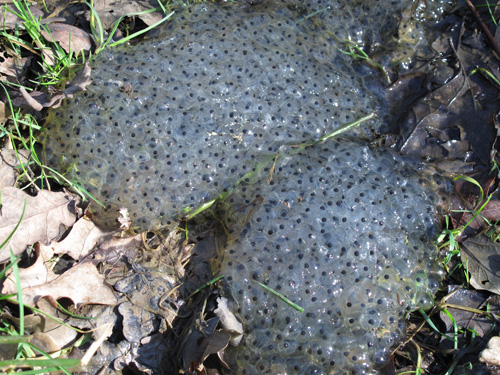
The days are definitely getting longer now and day is inexorably swallowing up the night as we move headlong into spring. You always know when spring has arrived when you see the great mounds of gelatinous frogs spawn that seem to magically appear in ponds and slow flowing streams.

Frog Spawn in a static puddle of water
For the otter the increasingly short cover of night must mean that either their hunting periods must be more intense under the cover of darkness or that their hunting period is pushed ever closer to the margins between night and day.

With this in mind I set off very early this boring at around 5:30am on the off chance that I might happen across the otter in the southern part of the river where the activity over the last few months has been more intense. There was some daylight but this was tempered by a low hung mist that clung tightly to the rivers and streams washing the landscape with the watery, indistinct palette of a Turner watercolour.

At first there was very little other than the small group of there or four Roe Deer that frequent the meadows on either side of the river. Not even a Barn Owl or Fox to be seen. That said the fresh cool air and quite stillness more than compensates for any lack of wildlife. I think I did briefly catch a glimpse of a Water Vole as it dived beneath the water and disappeared in the smokey mists that creeping over the surface of the water.

Continuing along the river to check out the usual sites I then rounded a bend in the river only spot some way off and thankfully not hidden by the mist the unmistakable shape of an otter making its way down stream directly towards me. What a stroke of luck! My first instinct was to just sit and watch it pass by but i remembered - for once - that I had my compact camera in my pocket, just in case, so whipped it out to capture a couple of frames as the otter swam by.

The otter swims close to the river bank and dives occasionally to 
forage for food
Now I have to apologise in advance for the poor quality but you have to remember its about 5:50am and the light levels are pretty low. Not only that but the mist is making things doubly difficult. That said you can still see that the otter is quite unperturbed by my presence and I followed it along the river as it continued to drive every 20-30seconds foraging in the nock and crannies of the riverbank, no doubt trying to flush out some tasty morsel.

Not such a clear photo but the chocolate brown fur is unmistakeably

On this occasion I followed the otter along the river for about 200m, it didn't seem especially bothered by my presence and continued to behave quite naturally I think. Eventually it made its way over to a small shrubby willow that overhangs the river and disappeared beneath it. I did see it reappear briefly on the other side but it quickly dived and disappeared into the thicket again. After a minute or so it did start to call with its familiar staccato whistling call which was great to hear but it didn't last too long and I lost sight and sound altogether. Otters use these calls to communicate with one another so its possible that there could be a breeding pairs or perhaps even a mother with cubs in the locality. Its also said that if cubs are about it may be more likely to see otters in daylight, so you never know.


Saturday, 17 March 2012

Spring has arrived

At last you can smell spring in the air. There is a tangible sense of excitement all around as the buds begin to burst and the birds sing and dance in anticipation of the urgent need to reproduce. Along the waterways you can now se the first shoots of reed and other riparian plants beginning to show. Soon the streams and rivers I have been exploring so easily over the winter will become hidden by tall reed beds and grasses.

As the days lengthen the otter has to contend with shorter hours of darkness so it might be possible now to get a glimpse - if i'm lucky - either early in the morning or just before dusk as these otherwise nocturnal animals have to patrol their territories more frequently on the cusp of night and day.

This morning I set off just before 6am to collect my two remote cameras and to see if there was any wildlife about. As usually there was plenty of birdlife, this winter has been kind so there are lots of small birds around. There was very little else however and certainly no otters. However I was lucky enough to get just a brief glimpse of a Water Rail one of the more secretive wetland birds. They are much easier to see in the winter when he vegetation has died right back but in the summer next to impossible to find because the inhabit the dark noks and crannies at the very base of the tall reed beds and tangled vegetation along river banks.

I had moved both my cameras to the same location just beneath a small footbridge where i'd managed to capture some good footage last time I posted. Once again the otter had returned and I'd managed to capture two more good sequences.

This clip was recorded at 03:25 on 4th March 2012. If you look carefully you can see
the otter sprainting on the bricks.


This clip was recorded at 19:13 on 9th March 2012. Something has taken the otters
interest just above its sprinting brick. Again you can clearly see it sprinting.


This small bridge has been a really good location to capture footage of the otter in action. It has visited this location quite reliably. I moved both cameras to this location to see if i could capture the otter leaving the area to see where it went since above this bridge I've found no physical evidence of otter activity. The second camera yielded no footage at even on the same evening (the 9th) when both were operating less than 15ft apart. I'm beginning to wonder if this bridge actually marks the boundary of this otters territory, which would explain why there have been no physical signs above this point. This idea might be supported by the fact that in both sequences you can see the otter clearly turn round and go back the way it came. Despite the fact that there is a perfectly good river beyond this bridge this otter appears not to explore beyond this point. 

I think what I might do is try to locate a camera so that it either covers the entire bridge this way it might be easier to establish whether the otter does in fact turn round or not.


Wednesday, 15 February 2012

Lengthening days and disrupted cameras

At last there is a perceptible lengthening in daylight hours as we move slowly towards spring. The sun began to rise this morning at around 6:30am and dusk didn't arrive until 5:30pm. For months the day seems to begin reluctantly, the sun rising ever so slowly as if waking from a heavy night out on the other side of the world. Then quite suddenly, it seems to rise and set more quickly as if in a hurry for urgent spring to arrive.

Yesterday I set out along the southern part of the valley where there seems to be much more otter activity. I've moved one of my cameras to see if I can capture some footage of the otter leaving the river by the sluice gate where I'd seen spraint very close to the public footpath.

There were a number of new spraints visible but unfortunately none near the camera so I didn't disturb it and moved on down the river. Just a little further on a spotted the iridescent back of a kingfisher skimming low just above the water as it followed every twist and turn of the river course.

Later in the day I returned to the river to walk the dog. This time as I rounded the corner on my approach to the sluice gate I noticed workmen busily installed a barrier just at the point where I'd installed the camera. I was sure they must have seen the camera but rather than draw attention to it I passed on by and resolved to return later to check that it hadn't been disturbed. It feels terribly clandestine putting up the cameras and trying to keep there location secret but this is essential to ensure that they are not stolen or interfered with.

I returned later in the day when there are fewer people about to check out whether the camera was ok or not. Of course the first thing i noticed was fresh otter spraint exactly in the location that confirmed that the otter had passed in front of the camera. The camera however wasn't in place and was lying, faced own in the mud- typical. I don't think the workmen had deliberately disturbed it, they had simply knocked it off the tree where I'd mounted it. Anyway it has become detached so I had to unhook it - which is a bit of a job - and decided to take it back home to make sure it was functioning properly. I resolved to try to return before dusk to reinstate it as soon as I could since the otter had passed through recently there was a chance it might come this way again so I had to move quickly to get it up and running again.

I've noticed this pattern in otter activity, sometimes you seem to get bursts of activity over several days where they appear to have a routine, exploring a small area and visiting the same sites over and over again. Then nothing. All activity seems to stop for days, even weeks, the animal just disappears. Maybe it just passes through stopping just briefly to spraint in slightly different locations or moves off to hunt in more fruitful locations.

Friday, 10 February 2012

New snowfall reveals more of the story

The overnight snow showers were again light but the covering at first light was thicker than last weekend. The landscape has a cold erie luminance when there is a blanket of snow, its strangely reassuring. You can see further and there is more definition in the shadows which makes wintery early morning exploration far more enjoyable despite the biting cold. Usually its pitch black at 6am and the imaginary shadow monsters of childhood still lurk in the subconscious and cause the heart to beats a little faster if you happen to flush out a pheasant or hear a sudden crack or crunch nearby in fathomless darkness.

Today I thought i would try to cover as much ground as possible to see what the snow covering might reveal. Snow acts like a giant sheet of paper and the tracks and signs laid down over night are like words written down to tell the tail of what when on over night. The important thing is to be the first to read the story since when other people begin to stir and move over the page the story becomes much harder to read and eventually is oblitorated by human footprints and dog tracks a like.

I began by walking up to the northern end of otter valley. There has been very little evidence of otter activity here over the past few weeks so I was keen to see if the snow might tell a different story. Fox tracks were everywhere. Its surprising how far a fox travels over night i followed one set of tracks almost from my front door all the way along the river for about 2 miles. The Northern end of otter valley is where i'd set up my cameras in the past and I still have one set up there. For weeks i've seen little otter activity and almost no sprainting so, as i approached the first key bend in the river - where the footbridge crosses a small side stream, i was keen to see if there were any clean tracks visible. At first sight absolutely nothing, i even went up and own the banks of the river a few hundred meters but still no signs of activity at all. Then, as I made my way towards the main road I notices one set of tracks crossing the path into the reedy area where the river crosses meadows beyond which lies the church and the fishery. The tracks were clearly otter and I could see where the animal had left the main river, crossed over the footpath, under a fence and over the snow covered meadow towards the smaller side channel. From here I couldn't track it any further since this is all private property but at least its a good sign that the otter is still about even if its activity appears to be more transitory than before.

My next target was the new area I've been looking at where i'd seen tracks in the snow previously. I quickly made my way back home and jumped in the car to travel the 2-3km to this more southerly part of the valley. Speed is of the essence here because its 7.30am and the number of dog walkers about is on the increase and i need to get there before any evidence is wiped away by clattering feet. I arrived just as the light levels began to lift from the gloom of early dawn into the crisp light of morning. The Path along the river bank appears virginal which is a big bonus and I begin to make my way along the river heading south. Again fox tracks are in abundance and it is possible to get a clear idea of the gait of the animal as it trots purposefully along, occasionally stopping to snuffly about in an adjacent hedge. You can even see the light brushwork of its tail as it dusts away at the surface of the fresh snow to create a delicate furrow of its own as the fox moves along.

Otter Tracks along footpath
Rounding the bend I come to the part of the path where i'd previously seen otter tracks bounding along the path. Once again here they were in abundance. This otter clearly likes this area there has been so much activity here, perhaps it has a temporary holt here in amongst the brambles. The tracks appear to emerge from the bramble thickets to the side of the path and follow the path for a few hundred meters before diving back into the undergrowth again only to emerge once more a little further along.

At one point the otter appears to think about nudging its way under a nylon fence to enter the main river to the right of the shot. It clearly thinks better of it though and continues along the path instead. There are signs that the otter may occasionally enter the river at this point pushing its way under the fence. However there is a steep embankment here so it is unlikely that it would leave the river here so it would have to travel further down river and emerge by the sluice gate where i've set up a camera to see it this might be the case. Hopeful i'll get some new footage soon - if I'm lucky.

Otter tracks appear to approach the netting fence and
there are signs that it pushes at the base of the net
but then move off again along the path
Further along the path the otters seems to have a roll in the snow. There are clear signs of it thrashing about against the hedge line. This activity may be connected with cleaning its fur or even trying to remove excess water. Anyway it is interesting to have clear evidence of different sorts of behaviour all of which helps to develop my understanding of the otter's routine and lifestyle.

Just a few meters beyond this point there were human footprints so luckily for me this human had decided to turn round and go back along the river the way they had come otherwise all this lovely otter evidence would have been lost.

Badger print with its long dangerous looking claws
and broad powerful appearance
I continued along the main river to a weir where the path takes a sharp right through a small wood. This leads to another area where I'd seen a large amount of otter activity in the past. I was curious to see if the snow would reveal anything new here. Crossing the small footbridge in tot he wood i noticed a new set of tracks but this time not otter but badgers who clearly come down this way either to drink at the river or simply to forage for grubs etc in the undergrowth. Badgers are close relatives of the otter and like otters have a distinctive 5 toed print. The print of the badger shows a much broader and more powerful looking print. The claws appear to be long and dangerous looking unlike those of the otter which are almost invisible.

Sunday, 5 February 2012

Will snow reveal all?

Snow had been forecast last night. The Met Office suggested there may have been unto 5 - 6 inches. This is quite a good opportunity of otter tracking. The snow makes the invisible nightly sojourn of the otter visible it briefly lifts the vail so that you can see exactly where the otters go and may even suggest what they have been up to, where they rest when the enter and leave the water and so on. You can also track them over much larger distances than usual, so the prospect of a good covering of snow is especially exciting.

However last night the temperature lifted and the snow feel like a watery slush which only just managed to settle into a slippery sludge. Come the morning it was already beginning to melt so I set out early to see if I could find any signs of activity. The snow had not lasted the night, there was nearly any visible although in some places the slush was still just solid enough to linger. The northern part of the range was almost entirely devoid of snow and there were few if any signs of otter activity. There was no spraint visible at any of the sites where activity over the past month or so had been so plentiful. Meanwhile a few miles down stream near to where i'd taken casts of paw prints the snow was more persistent and I could see fox prints in abundance. There further down the river I travelled however the less snow I found. I could see little if any otter activity here either.

On my return journey back to the car however I once again got some fantastic views of the Barn Owl quartering the meadow on the right bank of the river. But this time it seemed to disappear from view only to reappear from a completely different direction. Could the owl really cover so much ground in such a short space of time. Then whilst watching the owl in the middle distance as it floated silently just about the ground I glimpses a second owl on the left side of the river. It quickly dropped into the reeds for a few seconds before lifting off and sweeping languidly over the river to join its mate in the meadows on the right bank. I must assume therefore that this is a breeding pair having paired up early in preparation for the breeding season that is only just around the corner.

Otter tracks along the public
foot path.
Having tried to photograph the owls and realising the light levels where simply too low for me to capture any images without a tripod, I reluctantly left them to their business and carried on along the river. Again there were no signs of otter activity until I rounded a bend and noticed some very distinctive looking prints that were clearing following the footpath along the side of the river. You can only exploit the uncloaking effect of fresh snow if you are the first person to pass by and if you manage to keep the dog behind you otherwise as if just mere chalk dust those tell tail marks can all-to-easily be obliterated.

Here were very clear signs that an otter had passed this way heading north. It seems to have emerged from the undergrowth on the right hand side of the path. Travelled along the path for around 100m then dived back in the undergrowth the the right once more.

The interesting thing here is that this path divided the main river (to the left) from a small gully (on the right) however all along this section special measures have been put in place to 'improve' the river bank. Consequently access to the river on the left had been blocked by means of the nylon mesh fence, basically to keep human and dog traffic away from the river bank. One wonders if this isn't also impeding access for the otters too. That said the otter tracks don't seem to indicate that the otter tried to get to the river so it may not be the hinderance that I suspect it could possibly be.

A nice clear track with a 2 pence piece in the middle to
give some idea of scale.


Here you can see a number of tracks as the otter walks along
the track. They are surprisingly clear and I was fortunate to
have arrived on the scene before the ice melted.
The gap in the fence and the undergrowth beyond. This
is the point where the otter seems to have emerged
out onto the footpath

Saturday, 4 February 2012

At last winter bites

At last the sharp teeth of Winter begin to bite. Snow is forecast for the next few days. For the first time this season the streams have begun to freeze over and the frost has penetrated deep into the ground. The air is dry and the wind scorches the skin, taking the temperature down to -3ºF or -4ºF. Today has been a bright crisp day nonetheless so I returned to the beach area beneath the road bridge to take plaster casts of one or two of the otter paw prints I found yesterday.

A plaster cast of an otter paw print. Right foot possibly rear.
The cast shows just how large an otters paws are at 75mm long x about 65mm wide they are larger than a domestic cat and about the same size as a small dog. Clearly they are powerfully constructed both for foraging along the riverbed and for swimming.

The webbing between the toes spreading wide to produce four powerful paddled to push the animal through the water. One otter expert James Williams of the Somerset Otter Trusts suggests that on river otters you often don't see any indications of claws because they spend so much time scrabbling about along the river bank and in the stones and debris of the river bed that their claws often get worn down so they are not very apparent. This is certainly true of many of the prints I observe in my own area where the river banks are steep and the river beds very stoney indeed.

Just to make the print that much clearer i've marked it here
as well part of another print from one of the other paws which
is less distinct
Whilst under the bridge I explored both banks of the river and discovered prints and spraint in abundance, especially on the right bank. This could be another good place to set up a camera but once again its quite a public location so whether i can risk it or try to disguise the camera I'm not sure. I'll have to keep my camera location options open for the time being.

The day did finish much warmer than it started and a short walk along the river did not yield any new information. It is much harder to identify new activity in freezing conditions, one can't tell if sprint is fresh or not if it freezes before you discover it. It does make you wonder what effect cold conditions might have on the activity of the otters. For the most part I'm sure their activity does not change that much, they are used to cold conditions having such a broad range across europe and asia. However river otters may change their hunting patterns perhaps if the more minor channels and tributaries freeze over. They may perhaps keep to the larger channels and main river ways which are much less likely to ice up. Also really cold weather will certainly have an effect on the amount of time they can spend in the water and the speed at which they can recover body temperature when out of it.

The sunset this evening was beautiful with the pale browns and yellowed of the meadow suffused with the vivid salmon pink warmth of the setting winter sun. For the first time in a long while i watched as a ghostly white barn owl quartered its way across the meadow quickly switching direction then almost falling from the sky on to some unsuspecting meal below. I watched this glorious spectacle for about twenty minutes as the owl continued to sweep back and forth on silent wings ever watchful for prey hidden in the long flaming orange grass.

It always a magical moment when you see such a beautiful creature in the wild. Its movement and dangerous delicacy is always spellbinding. The winged angel of death comes silently and suddenly and vanishes like a spectre into the darkening sky.


Tuesday, 31 January 2012

Too much disruption?

I've been away for the past few days in Scotland so this is the first time I've had a chance to update the blog. The weather has taken a more wintery turn at last, the wind is more biting and the slippery, sticky mud that makes walking so difficult has been turned to a sparkling granite-like rock.

There has been a good deal of activity on the river recently but not by otters, its human in nature. This is the time of year when the various habitat management agencies are out in force to cut back last years growth of trees and shrubs that fringe the waterways. I guess the idea is to open up the waterways and to ensure they don't become clogged with vegetation. However the level of clearance in some areas is quite extreme. Not only removing valuable habitat for otters but also for other animals such and water voles, deer and foxes.

All this 'tidying' work has coincided with an obvious reduction in otter activity. There has been little new sprint visible and neither of my cameras have captured anything for a couple of weeks. Whether this sort of work with chain saw, tractor and hobnail boot has disturbed the otters I can't say but in all the areas I've been monitoring, the work has removed a considerable amount of cover and created a great deal of daytime noise and disruption. This can't be good news for the otters. Denuding the riverbanks and surrounding areas make it more difficult for otters to maintain their usual state of total invisibility but more importantly removing all the low level brush and brambles means that there are far fewer potential sites for temporary holts.

A steep bank at the top of which I found a
very fresh Spraint. 
So - for the time being - the otters may have moved to other more peaceful areas.

There have been positive signs here and there however. As I said earlier I've started to monitor a second area further down river from otter valley. Here there are still good signs of activity although even here the chains was and bonfires of fresh green wood have also been blazing. In fact there has been more clearance work here than in otter valley itself.

I've identified a few new sprinting sites including a very public site on the edge of a frequently used public footpath and at the top of a very step river bank. I've watched this location on and off for a while because there are clear signs that something moves through this area on a regular basis. Today I got some good confirmation that it is indeed used by otters. You can see from the image just how steep the bank is at this point. My dog is looking directly at the spraint which is very close the the footpath.

I have never seen sprint here before and I'm not sure if this is a one off or a regular spot. Its quite possible that it is a regular sport and that the sprain simply vanishes as a result of all the pedestrian through traffic.

Very fresh spraint found close to the public footpath
Otters like to leave and enter the river close to places where there is a lot of water movement, where the water course changes direction or where there is a new channel. This location is no exception since it is right next door to a large weir gate. The otter leaves the main river channel here to cross the path and enter another side channel.

A little further along the main river widens and flows more languidly beneath a major trunk road which crossed the river. The footpaths pass  under this bridge disappearing around a broad bend into open meadowlands beyond.

Otter footprint. Here I think we can see a good
impression of the Right Hind foot and just below it
and to the left a Left front foot impression
Beneath the road bridge there are two areas of mud and stones at the foot of the reinforced embankment. These lie behind a set of barriers which make it impossible for most people and - more importantly - dogs to gain access to the river. There is a drop of about 1m. In the mud I could see a really good selection of spore prints which I'm certain are otter. These two areas on stoney mud on both sides of the river are a really good stopping off point for the otters. Much of the river bank along this stretch is inaccessible to them and the central river channel is very deep so these mud islands are essential for a short break and to quickly dry the fur perhaps.

I did manage to get a couple of snaps of the footprints but I think I'll try to get some better shots or maybe take a plaster cast if I can.